
Australian horse racing is often presented through its most visible moments: the thunder of hooves at Flemington, the colour of the Melbourne Cup, the roar of a packed grandstand and the dramatic finish that separates a winner from the rest.
But beneath those moments lies something far more sophisticated.
Australian racing is not simply a sport. It is a large commercial ecosystem connecting breeding, agriculture, property, media, hospitality, wagering, employment, tourism, veterinary science, technology and regional economies.
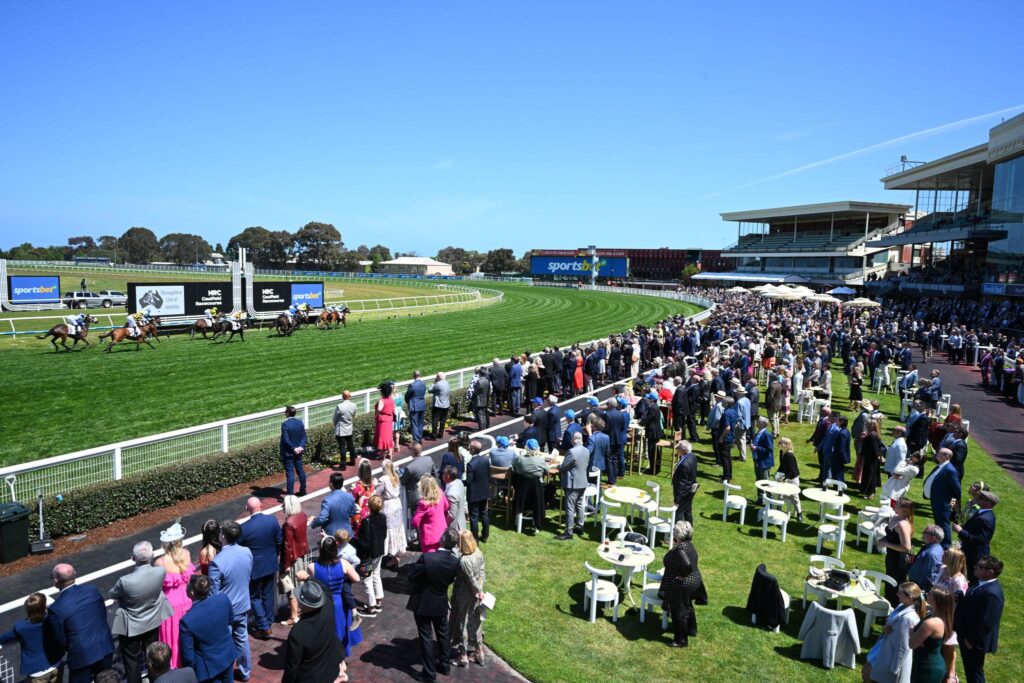
A racehorse may be the star of the show, but thousands of businesses help create the conditions that allow that horse to reach the starting gate.
More Than a Race
The commercial journey of Australian racing begins long before race day.
Consider a thoroughbred foal born on an Australian breeding farm. Its economic journey can involve breeders, stallion owners, veterinarians, farriers, feed suppliers, transport operators, insurance companies, bloodstock agents, trainers, jockeys, race clubs, media organisations and hospitality providers.
By the time that horse reaches a major metropolitan racecourse, an extensive supply chain has already been activated.
This is what makes racing commercially fascinating: one horse can become the centre of an entire network of economic activity.
The business model therefore operates on several interconnected levels:
- Breeding and bloodstock
- Horse ownership
- Training and racing
- Racecourse operations
- Wagering
- Media and broadcasting
- Hospitality and events
- Tourism
- Agriculture and regional employment
- Technology and data
- Advertising and sponsorship
The sport’s economic influence extends well beyond the track.
The Australian thoroughbred breeding industry represents one of the most commercially sophisticated parts of racing.
Breeding is effectively an investment business built around genetics, reputation and probability.
A stallion with an exceptional racing record can become a valuable commercial asset. Breeders are not simply buying access to a horse; they are buying access to its genetic potential and the possibility of producing future elite performers.
This creates an unusual market where pedigree becomes an economic asset.
The value of a young horse can be influenced by:
- pedigree
- sire performance
- dam-line history
- physical development
- conformation
- racing potential
- veterinary assessment
- market sentiment
- previous auction results
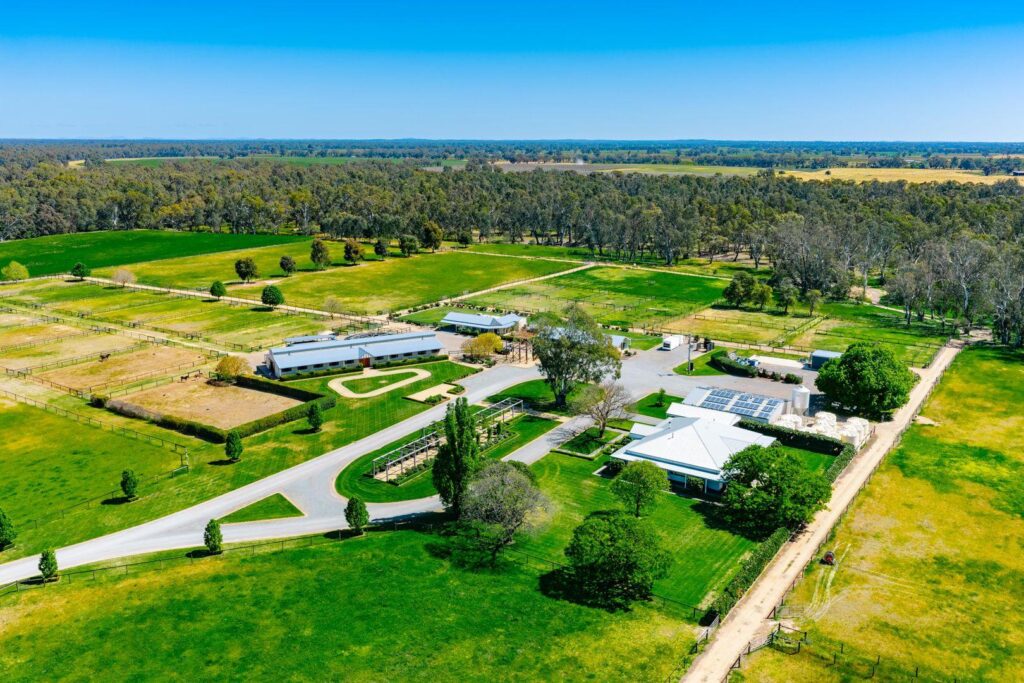
Major breeding operations consequently function much more like sophisticated agricultural enterprises than casual horse farms.
They require land, specialist labour, veterinary services, breeding infrastructure, transportation, marketing and international bloodstock expertise.
2. The Yearling Sale: Where Racing Meets Investment
One of the most interesting business environments in Australian racing is the bloodstock auction.
A yearling sale transforms a young horse into a financial asset whose value is determined by market demand.
Buyers may include:
- private owners
- racing syndicates
- trainers
- bloodstock agents
- breeding operations
- international investors
- racing partnerships
The auction environment creates a fascinating intersection between finance, speculation and sport.
A horse purchased for a substantial sum is not guaranteed to generate an equivalent racing return.
That uncertainty is fundamental to the business.
A relatively inexpensive horse can become a champion, while an expensive yearling can fail to reach the racetrack.
This risk creates demand for professional expertise.
Bloodstock agents analyse pedigrees, physical characteristics, veterinary information and market conditions to help investors make decisions.
In effect, they operate as specialist investment advisers for the bloodstock market.
3. Ownership Has Become a Business Model of Its Own
Horse ownership has also evolved.
Traditionally, racing could involve wealthy individuals purchasing horses privately. Today, ownership can be divided among multiple participants through syndicates and partnerships.
This changes the economics of participation.
Instead of one individual carrying the entire acquisition and maintenance cost, ownership can be distributed among dozens or even hundreds of people.
That creates a new commercial opportunity.
The ownership business can include:
Horse → Syndicate → Racing experience → Events → Hospitality → Community → Future ownership
The horse becomes more than a sporting asset.
It becomes an experience product.
Owners want access to race days, stables, trainers, jockeys, behind-the-scenes experiences and the emotional possibility of seeing their horse win.
This creates opportunities for racing clubs, trainers and ownership businesses to build long-term relationships with participants.
4. Training Is a Major Professional Industry
Once a horse enters training, another layer of businesses becomes involved.
A professional racing stable may require:
- trainers
- track riders
- stable staff
- veterinarians
- farriers
- physiotherapists
- nutrition specialists
- transport companies
- equipment suppliers
- feed businesses
- administrative staff
The trainer is therefore not simply preparing a horse to race.
They are effectively managing a high-value performance operation.
Modern trainers increasingly use data, video analysis, veterinary diagnostics and performance monitoring to make decisions.
Training has become more scientific, and that creates demand for specialist services.
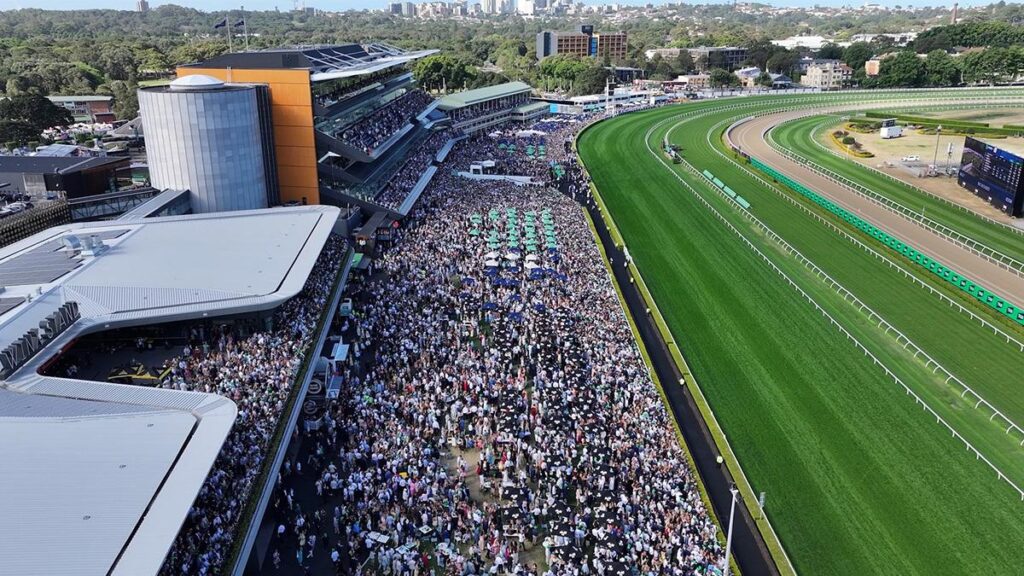
A major racecourse should not be viewed simply as a sporting venue.
It is a complex commercial property.
A race day can activate:
- hospitality areas
- restaurants
- bars
- private suites
- advertising spaces
- retail outlets
- parking
- transport services
- security
- catering
- cleaning
- entertainment
- corporate events
Major racing venues can therefore operate as event destinations.
The Melbourne Cup Carnival provides one of the clearest examples of how racing can intersect with fashion, tourism, corporate hospitality and entertainment.
The race itself may last only a few minutes.
The commercial operation surrounding it can run for months.
6. The Hidden Workforce Behind Race Day
The crowd sees jockeys and horses.
The business sees an enormous workforce.
A major race meeting can involve people working in:
Track preparation → horse care → veterinary services → transport → security → catering → hospitality → media → broadcasting → technology → administration → cleaning
This hidden workforce is one of the strongest indicators of racing’s broader economic importance.
A racecourse cannot function because of horses and jockeys alone.
It requires an ecosystem.
7. Wagering: The Financial Engine
Wagering is one of the most visible commercial components of Australian racing.
Punters can interact with races through various betting markets, while wagering operators and racing organisations participate in a broader financial ecosystem.
But wagering is more than placing a bet.
It creates demand for:
- race information
- form analysis
- statistics
- broadcasting
- odds services
- digital platforms
- customer support
- payment systems
- responsible-gambling systems
The digital transformation of wagering has dramatically changed how consumers interact with racing.
Instead of waiting for a newspaper or visiting a bookmaker, customers can access information and markets through mobile devices.
That has turned racing into a real-time digital information business.
8. Data Has Become a Racing Asset
One of the biggest changes in modern racing is the growing value of data.
Every race generates enormous amounts of information.
Examples include:
- finishing positions
- sectional times
- speed
- distance
- barrier position
- track conditions
- jockey statistics
- trainer statistics
- historical performance
- horse progression
This information can be transformed into products.
Racing data can support:
Media → Analytics → Wagering → Training → Broadcasting → Fan engagement
The more sophisticated the industry becomes, the more valuable accurate and timely data becomes.
This is an area where technology companies increasingly intersect with traditional racing businesses.
A race no longer exists only at the racecourse.
It exists across television, websites, social media, podcasts, video platforms, betting applications and digital publications.
That creates an enormous content economy.
A single major race can generate:
- previews
- interviews
- betting analysis
- horse profiles
- jockey stories
- trainer interviews
- photography
- video
- social media content
- post-race analysis
The modern racing industry therefore competes not only for spectators but also for attention.
Attention itself has become a commercial asset.
10. Hospitality: Selling the Race-Day Experience
For major racing carnivals, hospitality can become as important commercially as admission.
Corporate groups may purchase premium experiences that combine:
- food
- beverages
- entertainment
- private viewing
- networking
- branding
- client entertainment
This changes the role of racing.
For businesses, a race day can become a corporate networking platform.
Companies can entertain customers, reward employees, meet partners and strengthen relationships.
In this sense, racing becomes part of Australia’s broader business-events economy.

11. Fashion and Retail Create Another Economy
The commercial influence of major racing events also extends into fashion.
Race-day culture generates demand for:
- suits
- dresses
- hats
- accessories
- shoes
- jewellery
- grooming
- photography
Designers and retailers benefit from the cultural significance of major carnivals.
This demonstrates an important principle:
A major sporting event does not have to sell the product directly to create economic value.
The event can create demand across entirely different industries.
12. Regional Australia and the Racing Economy
Perhaps the most underestimated part of Australian racing’s business story is its connection with regional communities.
Breeding farms, training facilities and racing operations are frequently located outside major CBDs.
That means racing can support regional demand for:
- agricultural land
- feed
- machinery
- veterinary services
- transport
- accommodation
- local hospitality
- trades
- employment
A horse does not spend its entire economic life at a metropolitan racecourse.
Its journey can move through farms, spelling properties, training centres, transport routes and racecourses across different parts of Australia.
The racing industry therefore creates a geographically distributed economy.
13. Tourism: When Racing Becomes a Destination
Major Australian racing events can attract visitors who travel specifically for the experience.
This creates secondary spending on:
Hotels → Restaurants → Transport → Retail → Entertainment → Tourism experiences
The race becomes the reason for the trip, but the economic impact extends throughout the visitor’s stay.
This is particularly important for major racing carnivals.
A successful racing event can effectively function as a tourism product.
14. Sponsorship Turns Racing Into a Marketing Platform
Businesses do not necessarily sponsor racing because they are passionate about horses.
They sponsor it because racing provides access to audiences.
Sponsors can gain:
- brand visibility
- hospitality opportunities
- media exposure
- customer engagement
- networking
- association with major events
The relationship works in both directions.
Racing organisations receive commercial funding and business partnerships.
Companies receive access to an established audience and high-profile events.
This creates a two-sided commercial marketplace.
15. Technology Is Quietly Transforming the Industry
The future of Australian racing will increasingly involve technology.
Artificial intelligence, computer vision, predictive analytics, wearable technology and improved veterinary diagnostics could influence how horses are trained, monitored and managed.
Technology can potentially help businesses understand:
- performance patterns
- injury risks
- training loads
- recovery
- race suitability
- breeding potential
- fan behaviour
The important shift is that racing is moving from an industry based heavily on tradition and experience toward one increasingly supported by data and technology.
Tradition remains important.
But data is becoming harder to ignore.
16. The Real Business Model of Australian Racing
When all of these industries are connected, the structure becomes clearer.
The Racing Economy
Breeding
↓
Bloodstock Sales
↓
Ownership & Syndication
↓
Training
↓
Veterinary & Support Services
↓
Racing
↓
Media & Broadcasting
↓
Wagering & Data
↓
Hospitality & Sponsorship
↓
Tourism & Local Business
↓
Employment & Regional Economic Activity
This is why measuring racing purely through prize money or ticket sales misses much of the picture.
The real economic story is the network surrounding the race.
The Future: Racing as an Experience Economy
Australian horse racing faces the same challenge as many traditional sports: audiences have more entertainment choices than ever.
The future therefore may not simply be about producing bigger races.
It may be about producing better experiences.
The industry can increasingly combine:
- racing
- hospitality
- technology
- storytelling
- tourism
- fashion
- digital media
- data
- ownership experiences
The strongest racing businesses will likely be those capable of connecting these elements.
A racecourse can become an entertainment venue.
A horse can become a media personality.
An owner can become part of a community.
A race can become a tourism event.
And data can become a commercial product.
The Bigger Picture
The most fascinating thing about Australian horse racing is that the horse is only the beginning.
Behind every race is a chain of economic activity involving people and businesses that the average spectator may never see.
A breeder creates the horse.
An owner finances the journey.
A trainer develops the athlete.
A veterinarian protects its health.
A farrier maintains its feet.
A jockey competes.
A racecourse creates the stage.
Media tells the story.
Technology measures the performance.
Sponsors finance visibility.
Hospitality turns the event into an experience.
Tourism carries the economic impact beyond the gates.
And thousands of businesses participate somewhere along the way.
That is the real business of Australian horse racing: not simply an industry built around horses, but an interconnected Australian economy built around everything that happens before, during and after the race.